Nikkor 17-55mm f/2.8

My first-ever “major brand” zoom lens (though in fact Tokina, Tamron, and these days Sigma are “major” by any reasonable standards). So my first zoom lens made by a company that makes camera bodies. No, wait, Sigma makes camera bodies (and Vivitar did, back when they were “major”, may still). Anyway, my first zoom lens carrying the same brand as my camera does.

I got this because the Tokina 28-70/2.8 and the Tamron 28-105/2.8 were too long at the wide end to be comfortable as my main lens on a DX (1.5x crop factor) body. I had the Nikkor 18-70 kit lens for a while (bought used), but I got too much flare in situations that shouldn’t really have given me flare, and I fairly quickly bought this and sold the 18-70 on. This was a fine lens for me, and I regret selling it. I’ll regret it even more if I end up with another DX body after all; but I can’t afford to hold it unused while spending the money for the 24-70/2.8 that I’ve ordered.

Testing this is aimed at providing good examples.

I shot these tests on the D700 in DX mode, so the originals are only 5.1 megapixel images.

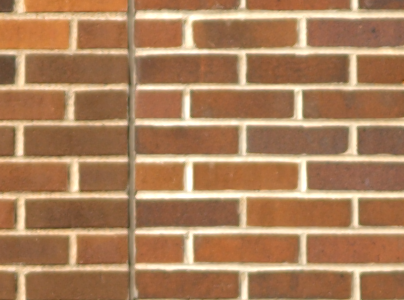
17mm f/2.8

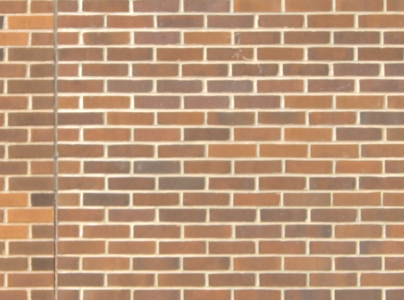
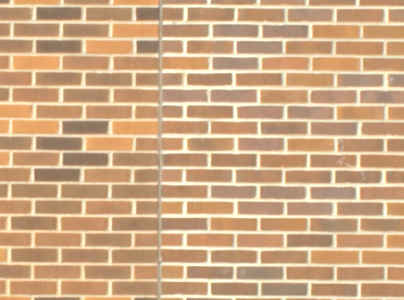
Nikkor AF-S 17-55mm f/2.8 DX at 17mm, f/2.8, center
Nikkor AF-S 17-55mm f/2.8 DX at 17mm, f/2.8, corner
Nikkor AF-S 17-55mm f/2.8 DX
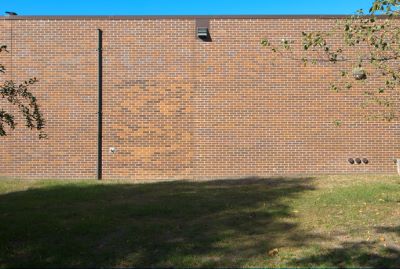
Nikkor AF-S 17-55mm f/2.8 DX at 17mm, f/2.8

This ought to be the worst case, everything at its widest. Not bad, eh?

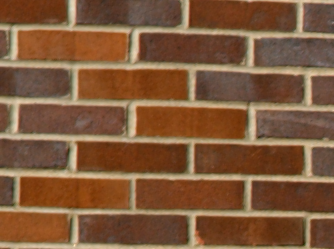
17mm f/8
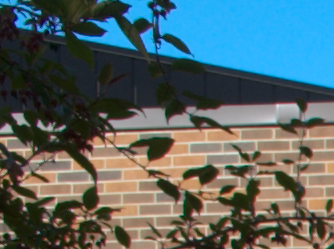
Nikkor AF-S 17-55mm f/2.8 DX at 17mm, f/8, corner
Nikkor AF-S 17-55mm f/2.8 DX at 17mm, f/8, center
Nikkor AF-S 17-55mm f/2.8 DX at 17mm, f/8

Still not truly wonderful in the corners; in fact not much improved from f/2.8. But I think that’s more to the credit of f/2.8 in this case.

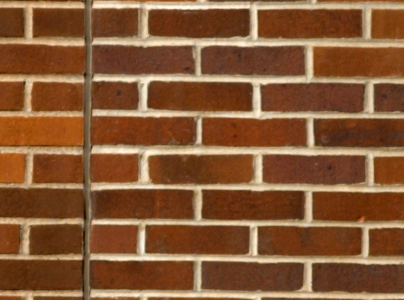
55mm f/2.8

Nikkor AF-S 17-55mm f/2.8 DX at 55mm, f/2.8, corner
Nikkor AF-S 17-55mm f/2.8 DX at 55mm, f/2.8, center
Nikkor AF-S 17-55mm f/2.8 DX at 55mm, f/2.8

55mm f/8

Nikkor AF-S 17-55mm f/2.8 DX at 55mm, f/8, corner
Nikkor AF-S 17-55mm f/2.8 DX at 55mm, f/8, center
Nikkor AF-S 17-55mm f/2.8 DX at 55mm, f/8

Mmmm, sharp. Well, still far from perfect in the corner.
Tokina 12-24mm f/4

Officially it’s “AT-X 124 AF PRO DX”. Their first shot at a crop-factor DSLR lens, and quite a big success; lots of people on the net like it for example.

A previous round of test shots when I first got this lens is here.

And why am I testing this when I’m leaving DX and about to sell it? Well, I needed to test my old 28-70, and I decided I should include other lenses as sanity-checks, so I’m looking at more than one set of results.


12mm f/4

Tokina AT-X124 Pro DX 12-24mm F4 at 12mm, f/4, center
Tokina AT-X124 Pro DX 12-24mm F4 at 12mm, f/4
Tokina AT-X124 Pro DX 12-24mm F4 at 12mm, f/4, corner

So not so shabby really, I don’t think.


12mm f/8

Tokina AT-X124 Pro DX 12-24mm F4 at 12mm, f/8, corner
Tokina AT-X124 Pro DX 12-24mm F4 at 12mm, f/8, center
Tokina AT-X124 Pro DX 12-24mm F4 at 12mm, f/8

There really isn’t anything much wrong with this by f/8.


24mm f/4

Tokina AT-X 124 Pro DX 12-24mm F4 at 24mm, f/4, corner
Tokina AT-X 124 Pro DX 12-24mm F4 at 24mm, f/4, center
Tokina AT-X 124 Pro DX 12-24mm F4 at 24mm, f/4

The 24mm end is pretty fuzzy in the corner too, at f/4.

24mm f/8

Tokina AT-X 124 Pro DX 12-24mm F4 at 24mm, f/4, corner
Tokina AT-X 124 Pro DX 12-24mm F4 at 24mm, f/8, corner
Tokina AT-X 124 Pro DX 12-24mm F4 at 24mm, f/4, center
Tokina AT-X 124 Pro DX 12-24mm F4 at 24mm, f/8, center
Tokina AT-X 124 Pro DX 12-24mm F4 at 24mm, f/4
Tokina AT-X 124 Pro DX 12-24mm F4 at 24mm, f/8

Pretty nice, especially in the center. Possibly better than the Nikkor at f/5.6, even.


Nikkor 24mm f/2 AIS

Nikkor 24mm f/2 AIS corner at f/5.6
Nikkor 24mm f/2 AIS center at 100%
Nikkor 24mm f/2 AIS center at f/5.6
Nikkor 24mm f/2 AIS full test image

I’ve had this since the Australia trip; is that 1983?  I’d gotten out to 28mm with the Vivitar Series 1 28-90 zoom, and was finding myself using the wide end of that a lot (I’d previously had a 28mm for my Miranda Sensorex, which I never liked and rarely used; I might have had one in the Pentax system too). It’s an old manual-focus lens, but it was thought to be very good at the time.  How will it stand up on modern digital?

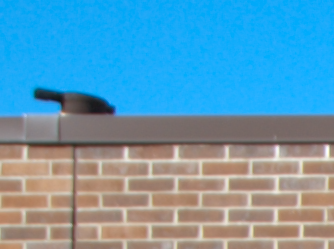
These are somewhat cluttered — the wall wasn’t really wide enough (I guess I should have walked in closer really), so there’s stuff overlaying the bricks in the edge shot. Try to ignore the out-of-focus foliage!

And I clearly wasn’t considering this carefully, because I only shot an f/5.6 test of this one.

The results aren’t stellar; definitely soft, even at f/5.6, even in the center. Well, it’s only one test image, perhaps I focused badly or held unsteadily. Or not. On the mental list for consideration.

Lens Testing Embarrassment

Apparently I should test my lenses semi-carefully more often. I don’t actually think I’ve particularly damaged this one in the last decade. This would explain a sort-of malaise about the more ordinary photos from much of that period.

On the other hand, it does make the decision about upgrading my main zoom pretty simple. So I’ve just placed that order. Yikes, modern good lenses are expensive! And either my memory is going, or it cost me $200 to wait for the D700 to arrive and for me to run some tests on the Tokina 28-70 ATX-Pro f/2.6-2.8 before ordering its replacement.

Philosophy

My lens-testing philosophy: don’t try to make meaningful quantitative measurements. Do try to take some comparable pictures under moderately controlled conditions. Be prepared to repeat experiments as necessary. Don’t expect sets of test shots from one year to be much use in making comparisons to independently-shot tests a few years later. And, the new part: do it more often!

Unless I’m testing for some very specific situation, I like the general approach of taking pictures of a flat surface that I can reasonably easily line the camera up flat to. It should have considerable high-contrast detail all over it. It should be big enough that I can shoot from 10 feet or more away, usually (close-focus is sometimes a problem area; then again for some lenses that may be exactly what I’m testing for). Something with rectangular detail all over makes it fairly easy to line up square to it. Brick walls are good, and newspaper pages taped to the walls (for closer-range work).

Look at the center, and the corners.  Sometimes other places on the edges, especially if looking for problems like whether the sensor plane is parallel with the subject.

If I were better at looking critically at my normal pictures and seeing the sources of problems with them, I might not need to do this.

For most of these, I’m posting a link to the full test shot, full-size but in JPEG format; the center shot, at 100% pixels (the file; what you initially see here is a thumbnail), in PNG or jpeg format, and the corner shot the same. All of these were shot in raw, processed in Bibble Pro, with no sharpening and light density correction. And I see that some of the photo sizes have been messed up by the upload process. I have to say that this WYSIAYG editor and the “convenient” automatic upload procedure for attachments and so forth really makes it tremendously much harder to write a complex post like this.

Given the risks of editing, the complexity, the time, and all that, I’m going to do this as separate posts for each lens. This will make some comparisons across lenses harder; so it goes.

Changes in Photography

Now that we’re very solidly in the digital era, but haven’t been here so long that it’s anything like settled down yet, I have a few observations to make on changes. Especially changes relating to beginning and/or young amateurs.

At the bottom level, it’s a huge win. Many children will get hand-me-down P&S digitals from their parents, and have computer access (or their own computers). With that setup, they can take infinite numbers of pictures for no cost. This is so much different (better) than it was for me; until I started doing my own darkroom work (which was a fairly big jump even then),  the cost of film and processing put a really tight limit on how much I could shoot (ages 8-14, roughly). Furthermore, needing to stretch the life of a roll of film added to the unavoidable delay between shooting and seeing the results, meaning that the feedback loop of learning was rather loose. The fast feedback is very important, particularly for a child learning something this technically complicated. Finally, those P&S are more capable and more controllable cameras than my Pixie 127 ever was (ask me if I’m frustrated that my most interesting travel was all before I had a decent camera!).

Higher up, it’s more mixed, and more complicated. When I was shooting with my mother’s old Bolsey 35, I had limitations in focal length (one fixed lens), aperture (f/3.2, it says there), shutter speed (only up to 1/200), and close focus.  But I could use any 35mm film available, and process it myself (especially the B&W) so I could push to EI4000 if I needed to (not that I knew how that far back).   My images could display the grain structure, and something decently close to the contrast and definition, of the best 35mm equipment in the market place.

Today, a lot of things that used to be controlled by choice of film and darkroom processing have moved into the camera body. And no junior-high student (okay, very very few) gets to actually play with a Nikon D700 these days. So in many ways the intermediate-level amateurs who are young (or otherwise on a severe budget) are more constrained from seriously pursuing some areas of photography today than I was back in 1969 when I got my first SLR.  Of course, a Nikon D40, which they might well get as a hand-me down or even afford from part-time jobs, is a very capable camera, much better in low light than what I could do with film in 1969.  But it’s far below what a D3 can do in low light today; there’s a difference between professional equipment and amateur equipment today that there wasn’t in 1969.  The differences between what you could do with a Pentax Spotmatic and a Nikon F then were much smaller than the differences between a Nikon D40 and a Nikon D3 today.  The body wasn’t nearly as important back then as it is today.

Of course, once you get the digital camera, you still have “all you can shoot” for free, that’s still a huge win.  And even cheap DSLRs produce better images under difficult conditions than one could do with film 40 years ago.