Tomorrow, hotel load-in starts.

(click through for gallery)
Minicon 45 is starting Friday.
Tomorrow, hotel load-in starts.
(click through for gallery)
Minicon 45 is starting Friday.
I am facilitating a short “taking things apart” session at 3:30pm Saturday for half an hour.  I know we’ll have multiple disk drives, and no doubt other things. (If you have anything interesting to take apart that you could contribute, please let me know; note that putting things back together is not in the plan!)
Children and adults are welcome. Some pieces removed are likely to be too small to be safe for toddlers, so parental discretion is advised!
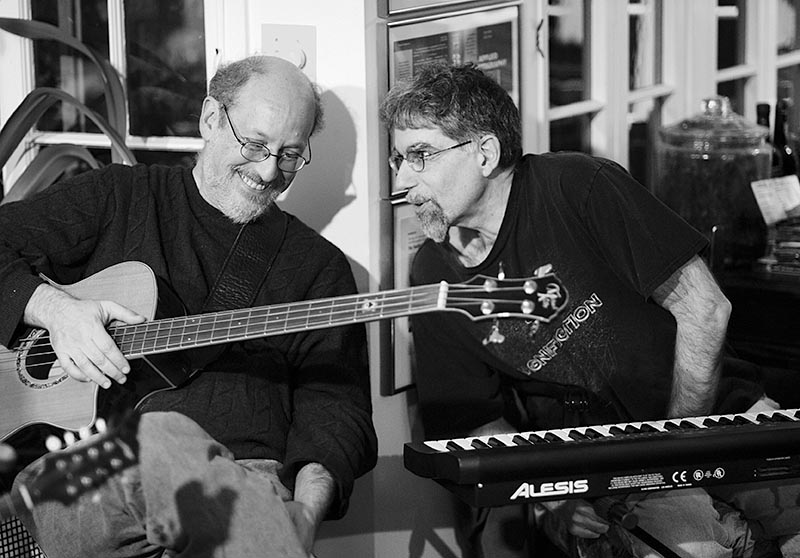
I got to go to a very nice music party last weekend; so there are photos.
Since it’s not an official term anywhere, it’s never had any kind of official control of the definition. So people probably don’t all agree. And it may be evolving over time; language does that, especially English.
The Wikipedia article (at least as of today) seems to capture this idea, and has more details about the history and evolution.
It was a solidly pejorative term originally, when Wilson Tucker invented it. However, by the time I encountered it, it was at worst ambiguous.
As many of you probably know, I’m a big Doc Smith fan. He’s often considered the defining example of space opera, in the good senses. So I’m not willing to go with a solidly negative definition for the term.
I’ve found a lot of people using the term to just mean “science fiction action-adventure”, and I don’t find that a satisfactory definition. It’s too big a field, and there’s already a good term for it, so I don’t want to let them have mine.
To me, space opera has several characteristics:
I don’t know if it’s a defining characteristic, or a common outcome of the other defining characteristics; but space opera tends towards moral clarity (or being simplistic; your choice).
So. Doc Smith is clearly space opera (Skylark and Lensman series in particular). George O. Smith’s Venus Equilateral is clearly space opera. But what about more modern works?
Well, Vernor Vinge’s A Fire Upon the Deep seems to qualify. It’s not quite focused on one protagonist, but the main characters play a really big role in saving everything. Lois McMaster Bujold’s Vorkosigan stories don’t, though; they’re not discovery-driven, and they take place in something of a backwater of even the human universe, yet with knowledge that the rest exists. (I love them to death anyway; my taste is not limited to space opera.)Â David Weber’s Honor Harrington series is borderline; the action takes place mostly in a small peripheral star kingdom, with the Solarian League visible but not involved in the background. Also, Honor isn’t the driver of much of the discovery, though she’s certainly terribly important in the action overall. They also tend a bit more than I prefer towards simplistic black-and-white views of events. Mike Shepherd’s Kris Longknife books fall in almost exactly the same place as Weber, I think; borderline.
I’m ashamed of my country again. I’m posting about the Peter Watts thing, of course.
I stole the title from Jo Walton, because it is perfect.
The story started popping up on my friends list after it appeared on Boing Boing this morning.
If you don’t know at least the bare outlines by now, you’re living under a rock; but you can find out at the links above, so I’m not going to repeat any of it.
Here’s what’s terrifying about this: there are quite a number of people commenting on the basic theme of “that’s the way things are.” That’s terrifying—apparently police (in the broad sense; I believe these were border guards) have been jack-booted thugs above the law for long enough that people have learned to take it for granted. That’s really, truly, deeply, terrifying.
The concept that the Constitution protects our rights is…incomplete. Nothing static can really defend against hundreds of years of political maneuvering. What it can do is give some basis for fighting back. Rights always need protecting. Ours in the USA have been fairly badly ignored over the last couple of decades, so we need to work extra hard for a while to recover from that.
There are the usual claims that Watts “must have” done something to bring this on himself. It’s entirely possible he did some things that I would describe as “inadvisable” in his situation. Nobody who knows him thinks he started hitting the policemen, though, so I don’t either. At worst, from what I’ve read, he asked questions, perhaps more than once, and he got out of his car. Those are not actions that could justify a police beating! As Jo put it, “he should have cringed more”.
We’ve given money to Watts, and to the ACLU, and I have written to one elected official already.